
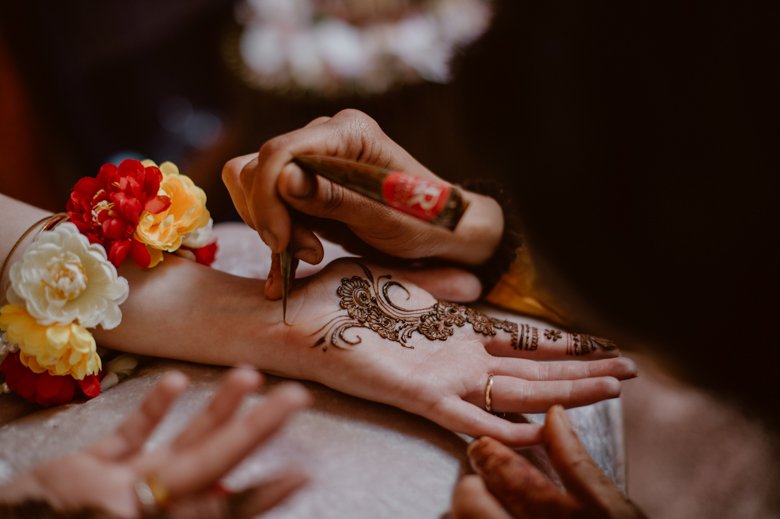
Every bride who sits down in our Georgetown salon asks some version of the same question — and it is rarely about the design. It is about the clock. Henna is a natural stain with a mind of its own: it goes on as a dark paste, comes off bright orange, and only reaches the deep reddish-brown colour brides dream about one to two days later. That means bridal henna is really two bookings in one — the day you reserve your artist, and the day the henna is actually applied — and getting either one wrong shows up in your wedding photographs. This guide walks through both: when to book your bridal henna artist, and how to time the application so the stain peaks on your wedding day, not the day after it.
First, understand the stain: how henna colour actually develops
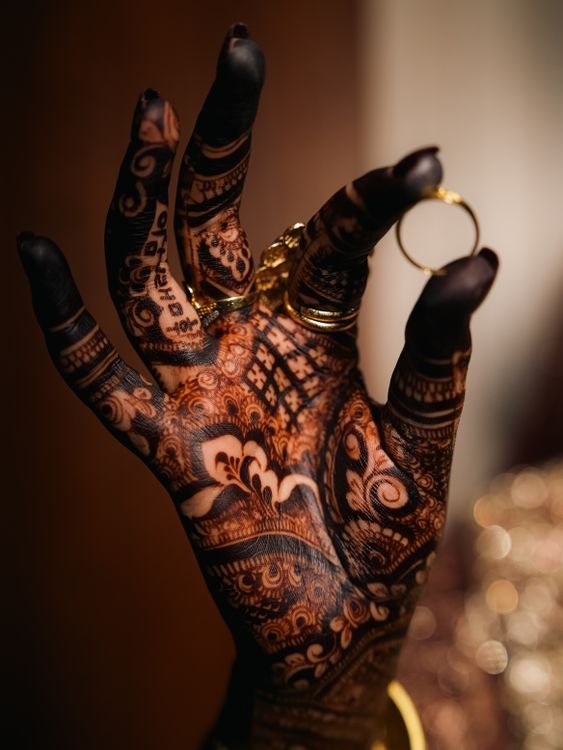
Natural henna stains the top layers of your skin, and the colour builds in stages. When the dried paste is first removed, the design underneath is a light, bright orange — every bride's moment of panic, and completely normal. Over the next 24 hours the stain oxidises, darkening through a rusty orange into a rich mahogany brown. Somewhere between 24 and 48 hours after the paste comes off, the colour reaches its deepest point. From there it holds beautifully for several days, then fades gradually over one to two weeks as your skin naturally renews itself.
Two things follow from this. First, the wedding day you are aiming for is not application day — it is application day plus one to two days. Second, there is such a thing as too early: henna applied four or five days before the wedding has already passed its peak by the time you walk in, and the fading starts unevenly, fingertips first. The whole art of bridal henna timing is landing the peak exactly on the day the cameras are out.
Working backwards: the ideal bridal henna countdown
Start from your wedding date and count backwards. For most brides, application day is two days before the wedding. If your wedding is on a Saturday, your henna goes on Thursday. The paste stays on through Thursday, comes off that evening or Friday morning, and the stain spends Friday deepening. By Saturday morning it is at its richest — and because the work is already done, your wedding morning is free for makeup, hair and dressing, with no wet paste to protect.
There are two variations worth knowing. If you are holding a separate mehndi event where you want the finished stain on show — rather than fresh paste — apply the henna two days before that event instead, and accept that by a wedding several days later the colour will be softer. And if your celebrations run back to back, with the mehndi the night before the wedding, a one-day gap still works: the stain will be deep, just a half-shade lighter than its absolute peak. What we advise against is applying henna the morning of the wedding itself. The paste needs hours on the skin, your hands are out of action while it dries, and the colour in your ceremony photos would still be orange.
The week of the wedding, day by day
Three days before: finish anything that strips or soaks the skin. Waxing, manicures with long soaks, and heavy exfoliation all belong here or earlier — after the henna is on, they would lift the stain unevenly. This is also the day to confirm timings with everyone: artist, makeup, and whoever is helping you dress.
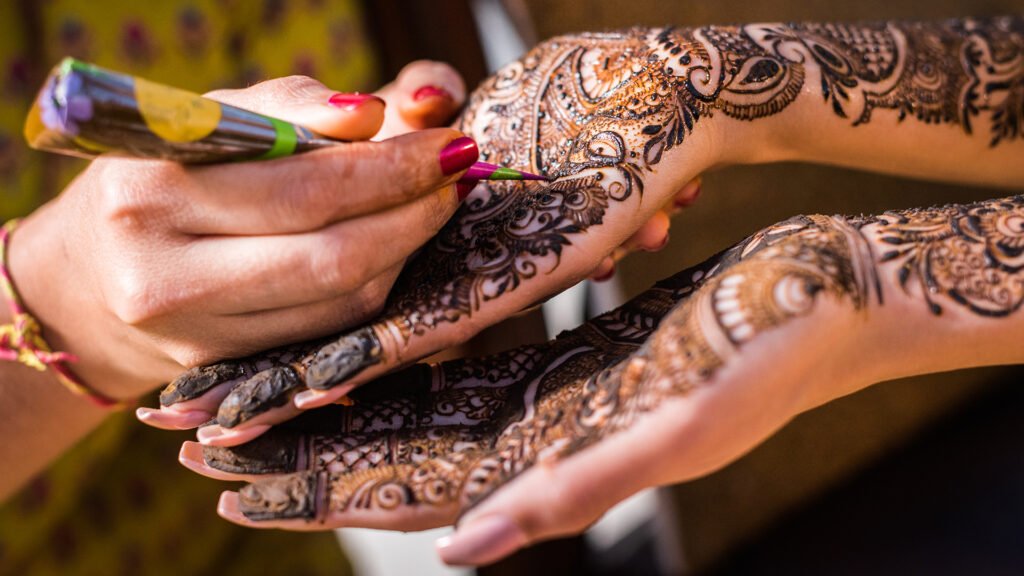
Two days before — application day: shower and exfoliate gently before your appointment, then keep skin bare — no oils, lotions or fake tan on the areas being decorated, because a barrier between paste and skin means a paler stain. Wear something comfortable with sleeves that roll up past where your design ends, and eat beforehand: a full bridal session, hands front and back plus feet, takes hours, and you will not be using your hands. Then sit back. This is meant to be one of the enjoyable appointments of the week.
One day before: the paste has flaked or been gently eased off, and the stain is deepening by the hour. Keep your hands warm, avoid long soaks and swimming, and let the colour do its work. Household chores involving hot water and detergents are officially someone else's job today.
Wedding day: the stain is at its peak. Nothing to apply, nothing to protect — just deep, even colour that photographs beautifully against your outfit and jewellery.
When to book the artist: earlier than you think
The application may be two days before the wedding, but the booking belongs months earlier. Bridal dates at Beauty by Isra are taken one client at a time, and wedding weekends in Georgetown and across Halton Hills — especially in spring and summer — are the first to go. Our honest advice: book your bridal henna artist as soon as your wedding date is fixed, in the same round of bookings as your venue and photographer. If your date is already close, ask anyway; weekdays and off-season dates open up more often than brides expect, and it costs nothing to check.
When you book, it helps to have three decisions ready. Your hand coverage: the bridal hand packages are Silver $140, Gold $250, Diamond $350 and Platinum $450 — the difference is simply how far the design extends, from just past the wrist up to the elbows. Your feet: bridal feet packages run from $60 to $350, applied in the same session so hands and feet peak together. And your people: if your bridesmaids, mum or guests will want henna at your mehndi, guest henna is $90 an hour — telling us your guest count when you book means enough time is set aside, and nobody is still waiting for a cone at midnight.
Aftercare: protecting the colour you waited for
A deep stain is part artist, part aftercare. The longer the paste stays on the skin, the deeper the colour — many brides keep it on for six hours or more, and overnight if they can protect it. Once it is off, treat the design gently for the first day: brief contact with water is fine, but no long baths, no swimming, and no scrubbing. Warmth is the stain's friend while it develops. In the days after the wedding, a little natural oil or balm over the design before a shower acts like a raincoat, and gentle patting — never rubbing — when you dry your hands keeps the colour even for longer.
The timing mistakes we see most often
- Applying henna too close to the wedding. Paste on the morning of the wedding means orange stain in the photos and a bride who cannot touch anything for hours.
- Applying it too early "to be safe". Four or five days ahead, and the peak has passed before the day arrives.
- Beauty appointments in the wrong order. Waxing or a manicure soak after the henna goes on will fade it in patches — those belong before application day.
- Leaving the booking until the month of the wedding. The design conversation is easy; the calendar is the hard part. Popular dates go first.
- Forgetting the guests. Deciding on guest henna at the mehndi itself, with no time set aside, is how an evening runs very late.
The good news is that all of this fits on one timeline, and it is a timeline we build with every bridal client at Beauty by Isra — henna, makeup and your pre-wedding facial planned together, so each one lands on the right day. Send us your wedding date through the Book page or call +1 (437) 227-3037, and we will count backwards from it with you.
Quick questions
How many days before my wedding should bridal henna be applied?
Two days before is the sweet spot for most brides. The stain reaches its deepest colour 24 to 48 hours after the paste comes off, so a Thursday application peaks for a Saturday wedding. One day before still gives a deep colour; the morning of the wedding is too late.
How far in advance should I book a bridal henna artist in Georgetown?
As soon as your wedding date is fixed. Beauty by Isra takes one client at a time, and spring and summer wedding weekends in Georgetown and Halton Hills book out first. The earlier you ask, the more likely your first-choice application day is free.
How long does a bridal henna session take?
It depends on coverage — a full bridal set, both sides of the hands plus feet, takes several hours. Treat it as an appointment to enjoy rather than squeeze in: eat beforehand, wear sleeves that roll up, and keep the rest of the day free of chores involving water.
Can my bridesmaids and family have henna at my mehndi?
Yes — guest henna is $90 an hour and can be added to a bridal booking or booked for an event on its own. Mention your guest count when you enquire so enough time is set aside for everyone.
My stain came off orange — did something go wrong?
No — that is exactly right. Fresh henna stain is always bright orange at first. It oxidises over the following 24 to 48 hours into the deep reddish-brown you are expecting, as long as the paste stayed on long enough and the skin stays warm and mostly dry.
Good to know
- Book the artist as soon as your wedding date is fixed — apply the henna two days before the wedding.
- The stain peaks 24–48 hours after the paste comes off, then holds for days before fading gradually.
- Bridal hands run Silver $140 to Platinum $450; feet $60 to $350; guest henna $90 an hour.
Topics in this guide: bridal henna Georgetown · mehndi artist Georgetown Ontario · bridal mehndi timeline · when to book bridal henna · henna artist Halton Hills