
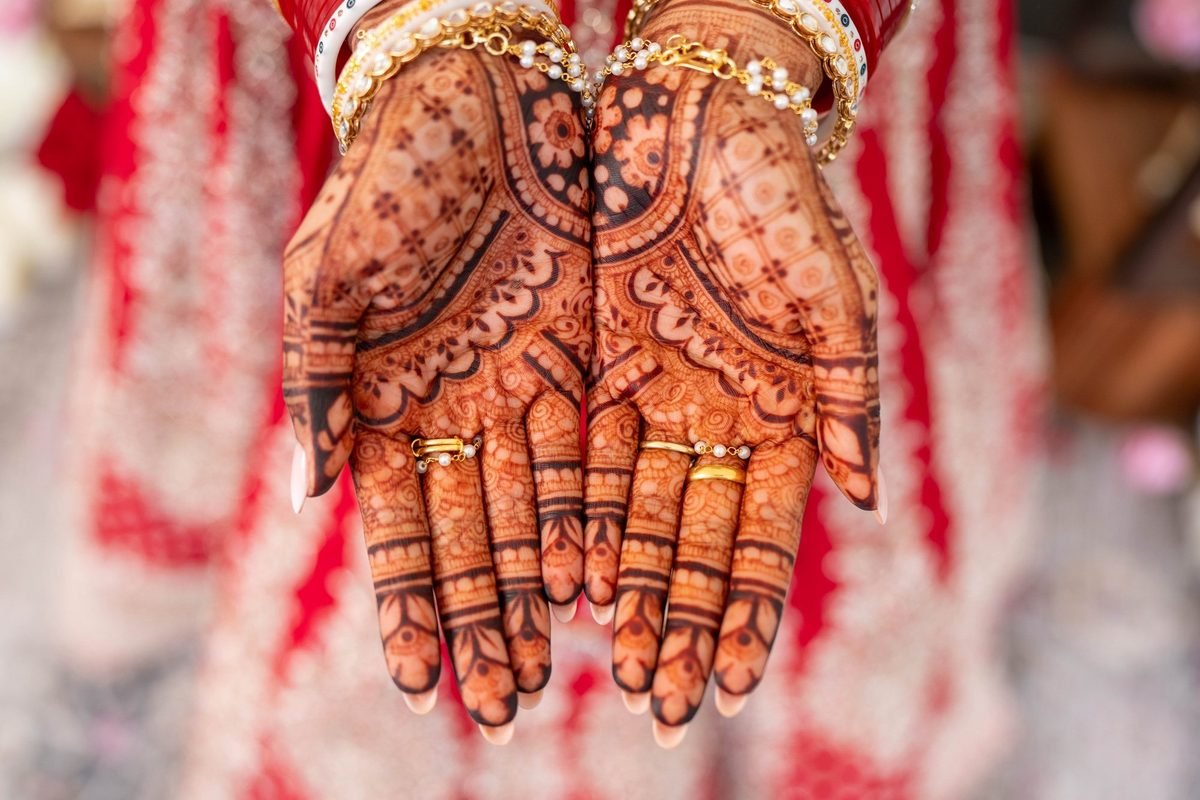
Every winter, the same thing happens at the salon: a client gets a beautiful henna design, walks out into a Georgetown cold snap, and calls two days later worried that her stain looks lighter than her friend's did in July. The design was the same. The henna was the same. What changed is the weather — and winter changes almost everything about how a henna stain develops. Cold air, dry indoor heating, hot showers, wool gloves and constant handwashing all work against a fresh stain. The good news is that henna aftercare in cold weather is not complicated. It is a handful of small habits, done at the right moments, and they make the difference between a pale orange stain that fades in a week and a deep, rich colour that carries you through the whole season.
Why winter is hard on a fresh henna stain
Henna stains the top layers of your skin, and the colour deepens through oxidation — a slow, natural process that loves warmth and time. In summer, your hands are warm, the air is humid, and the stain develops almost on its own. Winter in Ontario reverses all of that. Outdoor temperatures in Halton Hills regularly sit below freezing from December through February, and cold skin simply takes up colour more slowly. Step indoors and the problem flips: heated air is dry air, and dry skin flakes faster, carrying the stain away with it. Add the realities of winter life — pulling gloves on and off, washing hands more often during cold season, longer hot showers, hand sanitiser at every shop door — and a winter stain faces more friction, more water and more dryness in its first 48 hours than a summer stain faces in a week. None of this means winter henna is a bad idea. It means the aftercare matters more, and it starts before you leave the salon.
The first rule: give the paste time
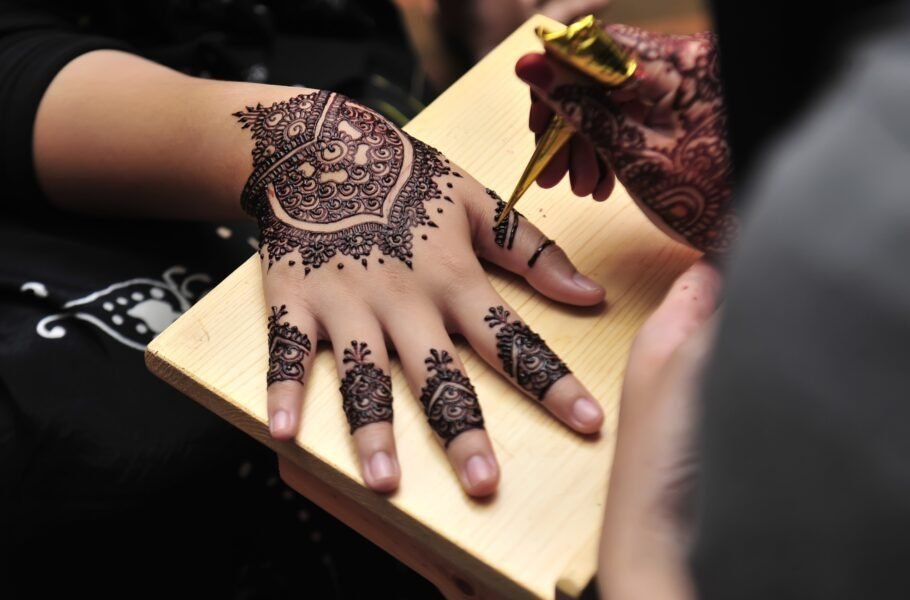
Every dark stain begins with patience. The longer the henna paste stays on your skin, the more colour it delivers — this is true in every season, but in winter it is the rule clients break most often, because cold hands get fidgety and gloves get pulled on. Where you can, leave the paste on for at least six hours, and overnight if your appointment allows it. If you must go out, let the paste dry fully first, then wrap the design loosely — a soft cotton wrap or an old, clean sock over the hand protects the paste from rubbing off inside a glove. Never pull tight winter gloves directly over fresh paste: the friction will drag half the design away and the stain underneath will come up patchy. At Beauty by Isra, winter brides are always booked with this in mind — bridal henna two or three days before the wedding, never the night before — so the paste has its hours and the stain has its days.
Warmth is your stain's best friend
If there is one winter aftercare secret, it is this: keep the design warm. Warm skin stains deeper and darker, which is why the palms — the warmest, thickest skin — always take the richest colour. While the paste is on, keep your hands in your lap, near (never on) a warm drink, or simply under a light blanket while you rest. After the paste comes off, the same principle continues for the first day or two. Some clients gently hold their hands over the steam from a kettle or a bowl of hot water for a few minutes — a traditional trick that encourages the colour to bloom. What you must not do is chase warmth with water itself: a long, hot shower in the first 24 hours is one of the fastest ways to lift a young stain. Keep showers short and lukewarm for the first day, and pat — never rub — the design dry.
Seal it, then shield it from water
Two habits protect a developing stain, and winter clients need both. The first is the sealant: once the paste has dried and begun to crack, a light dab of lemon juice mixed with a little sugar, applied gently with a cotton ball, keeps the paste slightly tacky and in contact with the skin for longer. It is an old, simple trick the salon recommends for bridal work especially. The second habit begins the moment the paste comes off: oil before water, every time. Rub a natural oil — coconut, olive or mustard oil are all traditional — over the stain before you wash your hands, shower or do dishes. The oil forms a barrier that slows water reaching the stain. In winter this matters double, because you will be washing your hands constantly and every wash takes a little colour with it. Keep a small bottle of oil by the sink for the first week and your stain will reward you. What about balms and butters? A plain, natural balm is fine and helps with winter dryness — just avoid anything with exfoliating acids or heavy fragrance while the stain is young.
Moisturise — but choose carefully
Dry winter skin sheds faster, and when the top layer of skin goes, the stain goes with it. Moisturising daily is genuinely part of henna aftercare in cold weather: it keeps the stained layer of skin on your hands for longer, which is exactly where the colour lives. The catch is the product. Gentle, natural oils and simple balms support a stain; aggressive exfoliants, glycolic or salicylic acid products, and heavy-duty hand scrubs will strip it early. Put the exfoliating gloves away for a fortnight. The same goes for swimming pools and hot tubs — chlorine is a stain's enemy in any season — and for hand sanitiser, which is mostly alcohol. You cannot avoid sanitiser entirely in winter, but you can choose soap and water when you are at home, and you can re-apply oil afterwards. Think of it as a simple trade: everything that dries or strips the skin shortens the stain; everything that conditions it extends the stain.
What a winter stain timeline looks like
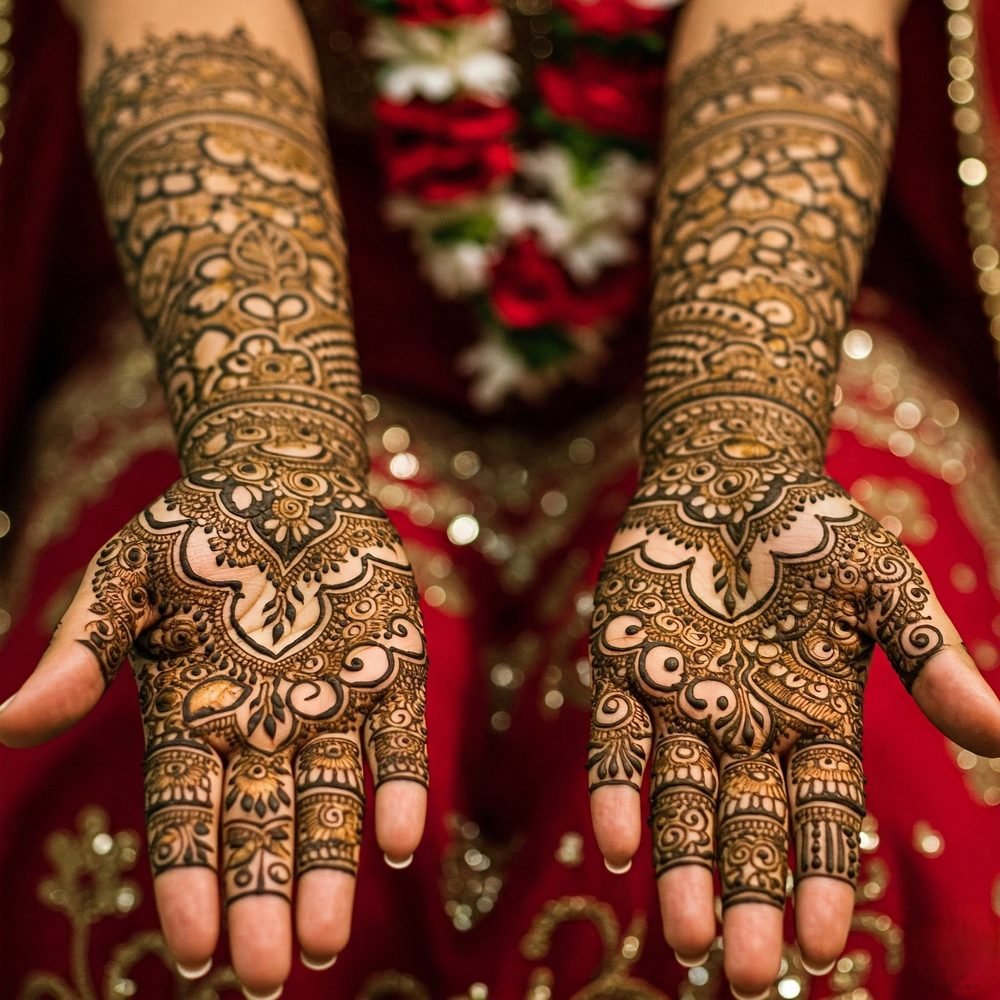
With good aftercare, a winter stain follows the same arc as any other — it just asks for a little more help. When the paste first comes off, expect a bright orange. Do not judge it yet. Over the next 24 to 48 hours it deepens through rust to a rich reddish-brown, and on palms it can reach a deep mahogany. That peak colour usually holds for several days, then fades gradually as your skin renews itself, typically lasting one to three weeks in total depending on placement and care. Hands fade fastest overall because they are washed most — though the palms and fingertips, with their thicker skin, often hold the deepest colour the longest. If your stain seems slow on day one in January, give it the full 48 hours before worrying — cold-developed stains are late bloomers, and warmth plus oil usually brings them round.
Booking henna in winter, the smart way
Timing ties all of this together. Because a stain needs a day or two to peak, winter henna should always be booked ahead of the event, never on the day: the day before a party at the latest, two to three days before a wedding. That gap lets the paste have its hours, the colour bloom at home where it is warm, and the design arrive at the celebration at its darkest. For gatherings, party henna at the salon starts at $10 and up per design, and guest henna for a whole group is $90 an hour. Bridal henna for winter weddings is priced by coverage — hands from $140 for Silver to $450 for Platinum — and winter brides get the same advice with their booking: wrap warm, oil before water, and let the stain come to you. Do that, and winter stops being the difficult season for henna. For many of our Georgetown clients it becomes the best one — a deep, dark stain against a pale winter hand photographs beautifully.
Quick questions
How long should I leave henna paste on in winter?
At least six hours where you can, and overnight is even better. Cold skin takes up colour more slowly, so winter paste needs more contact time, not less. Keep the design warm and protected while it is on, and never pull tight gloves over fresh paste.
Why is my henna stain orange?
That is completely normal. Every natural henna stain starts bright orange when the paste comes off, then deepens through rust to reddish-brown over 24 to 48 hours as it oxidises. Judge your stain on day two, not hour two.
Can I wear gloves after getting henna?
Yes — once the paste has dried fully. Wrap the design loosely in soft cotton first so the glove does not drag the paste off. After the paste is off and the stain is developing, gloves are fine; just re-apply oil to the stain after handwashing.
What fades a henna stain fastest in winter?
Hot water, frequent washing without an oil barrier, exfoliating products, chlorine and alcohol-based hand sanitiser. Short lukewarm showers, oil before water and gentle moisturising will keep a winter stain rich for noticeably longer.
How much does winter bridal henna cost?
Bridal henna hands are priced by coverage: Silver $140, Gold $250, Diamond $350 and Platinum $450, with feet from $60. Party henna starts at $10 and up. Book two to three days before a winter wedding so the stain peaks on the day.
Good to know
- Leave the paste on at least six hours — overnight if you can — and keep the design warm while it dries.
- Oil before water, every time: a natural oil barrier before washing protects a young stain.
- Skip hot showers, exfoliants and sanitiser where you can for the first days, and moisturise gently daily.
Topics in this guide: henna aftercare · how to make henna stain darker · henna stain tips winter · mehndi aftercare · henna artist Georgetown Ontario